
Audit Overview
Your store's untapped revenue potential — and how to unlock it
Why We Created This Audit
We analyzed bentleysbunker.com the same way we've audited 350+ e-commerce stores — looking for the specific gaps between your current experience and what top-performing Home & Living stores deliver. Every finding in this report is a revenue opportunity backed by industry data and competitive benchmarks.
What We Analyzed
- UX & Conversion Design15 findings
- Technology & App StackPlatform + 4 apps
- Industry BenchmarksHome & Living
Pages Analyzed
- Homepage4 findings
- Collection Pages3 findings
- Product Pages (PDP)5 findings
- Cart & Checkout3 findings
 This audit was prepared by Growisto — a CRO-led Website development team behind 167% conversion growth for Atomberg, 46% CR lift for TyresNmore, and 350+ e-commerce projects.
UX & Conversion Findings
Page-by-page analysis with visual comparisons against top Home & Living stores
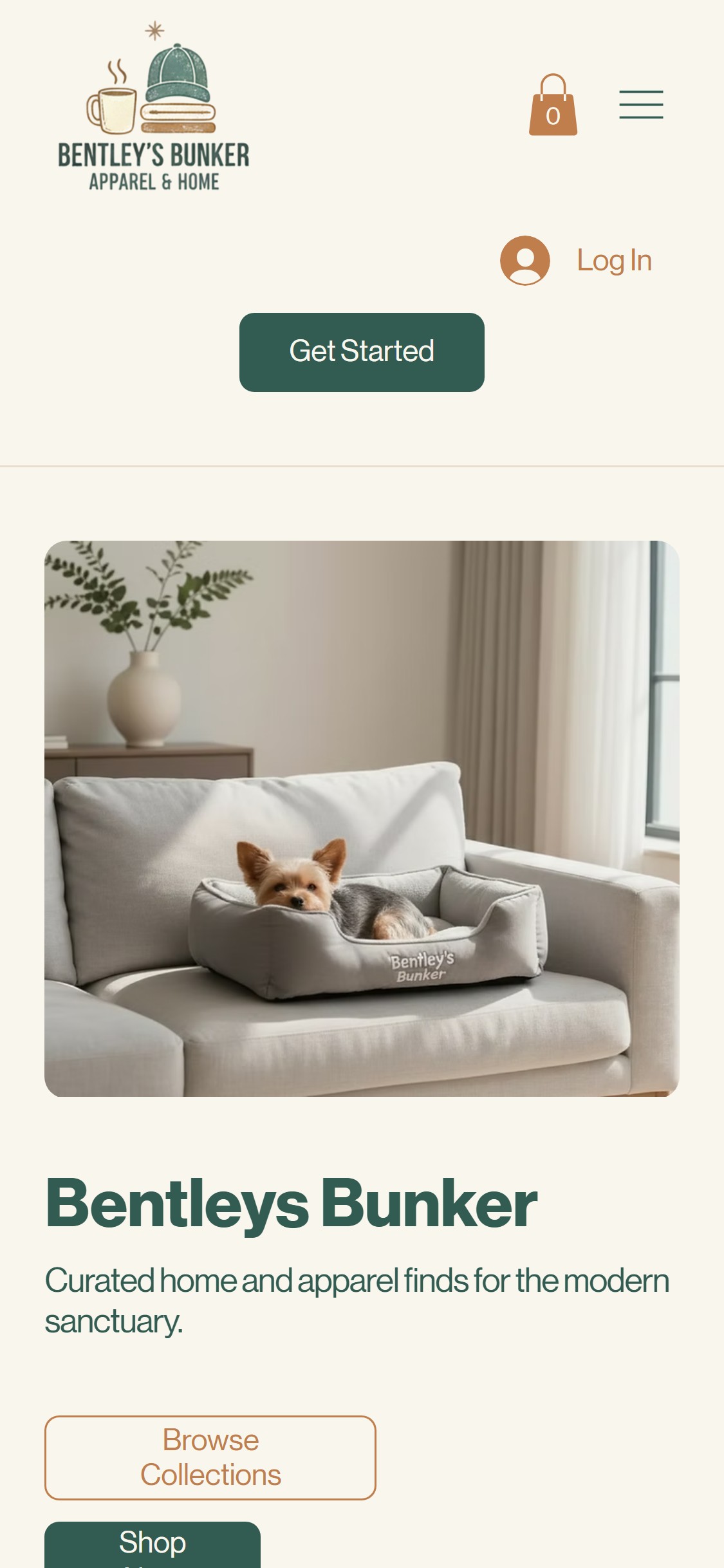
- The header area goes directly from the logo to the hero image — there is no announcement bar, promo strip, or utility bar anywhere on the homepage.
- Announcement bars are present on 10/10 top Home & Living stores benchmarked — it is the single most universal homepage pattern in the industry.
- Without a persistent bar, the brand cannot surface a free-shipping threshold, limited-time offer, or new arrival notice to every visitor immediately on load.
- Competitors like Anthropologie and Lulu & Georgia use persistent top bars to communicate seasonal promotions and free-shipping thresholds, which directly nudge visitors to meet the minimum order.
- Add a sticky announcement bar above the header with a rotating message: free shipping threshold (e.g., 'Free shipping on orders over $50'), seasonal promotion, or new collection teaser.
- Keep copy under 60 characters for mobile readability. Link the bar to the relevant collection or checkout page.
- There is no newsletter signup, email capture popup, or lead-gen form anywhere on the homepage or site footer — verified by scrolling through all sections.
- The footer contains only logo, tagline, hamburger menu, and three social links (Etsy, Instagram, X). No email input field exists.
- For a lifestyle brand competing in curated home & apparel, email is the highest-ROI owned channel — without it, all paid or organic traffic is permanently lost after a single visit.
- Lulu & Georgia and Anthropologie both use footer email signups plus exit-intent or scroll-trigger popups offering a first-order discount (typically 10–15% off) to capture warm visitors.
- Add a footer email signup with a value-exchange offer: '10% off your first order when you join the Bentleys Bunker community.'
- Implement a scroll-triggered popup (fires at 50% page depth) or exit-intent popup offering the same discount — configure it to suppress after first show so it doesn't annoy repeat visitors.
- A prominent 'Get Started' button appears above the hero image on the live store — this is a Wix platform onboarding element that was not hidden before publishing.
- This button is visible to every shopper on the homepage and product pages, signaling the site is not fully set up.
- Consumer trust research consistently shows that signs of an 'unfinished' site (placeholder text, admin UI, incomplete pages) cause 20–30% of visitors to leave without browsing.
- This is a simple configuration fix — Wix allows hiding platform-specific onboarding elements from the published site view.
- In the Wix dashboard, navigate to Site Settings → Remove the 'Get Started' onboarding widget from the live site view. This requires no design changes — just a settings toggle.
- Audit all pages for other Wix platform artifacts (editor guides, sample content, placeholder sections) before pursuing traffic growth.
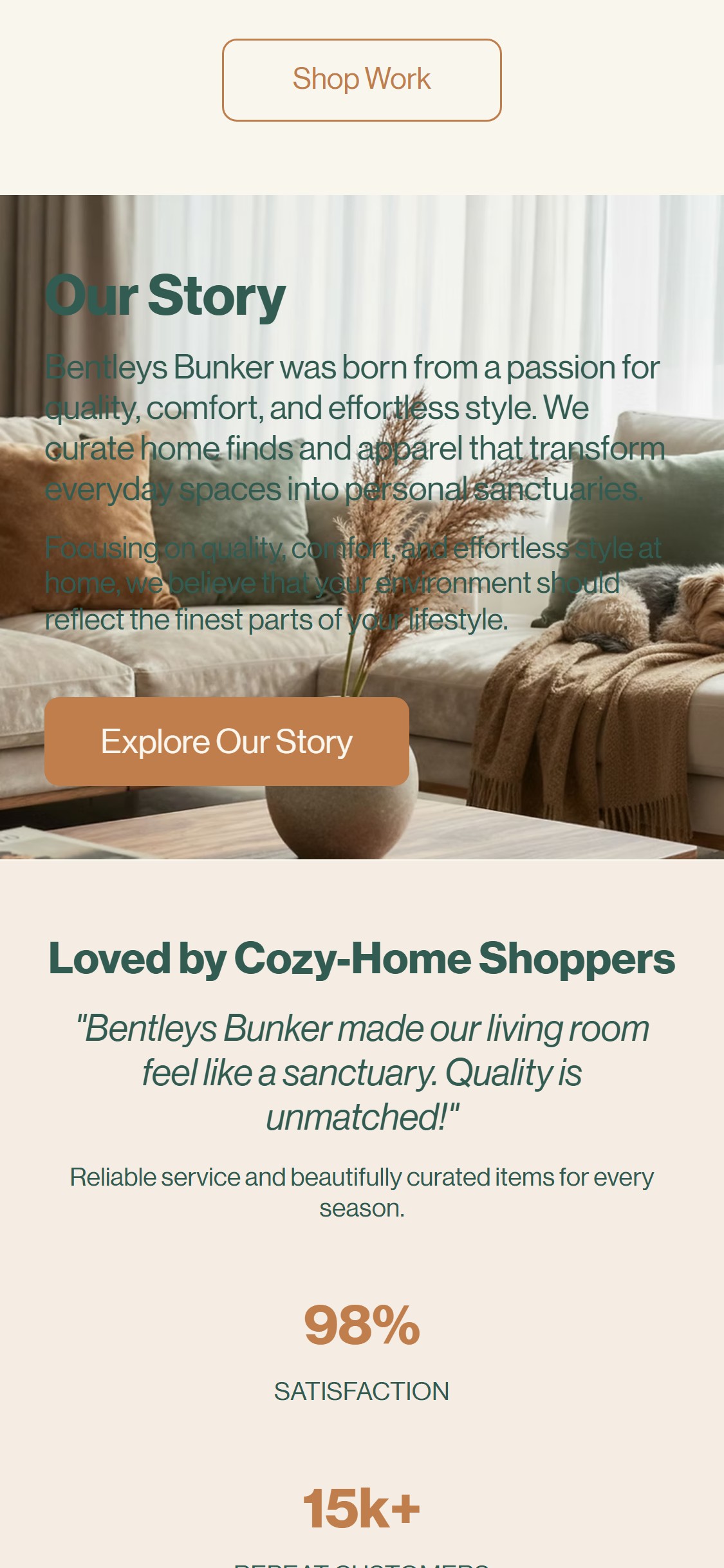
- The 'Loved by Cozy-Home Shoppers' section contains a single anonymous quote: 'Bentleys Bunker made our living room feel like a sanctuary. Quality is unmatched!' — with no reviewer name, location, photo, or star rating.
- A single unattributed testimonial is nearly indistinguishable from self-written copy. Shoppers have learned to discount anonymous reviews, especially on unfamiliar brands.
- The section sits below the fold but above the footer — it has high potential as a credibility anchor if real customer names, purchase-verified badges, or star ratings are added.
- Article and Lulu & Georgia show testimonial carousels with customer names, verified purchase labels, star ratings, and often the specific product purchased — each element independently increases trust.
- Replace the single anonymous quote with 3–5 real customer testimonials that include: first name + last initial, star rating (5 stars), and the specific product purchased.
- Source testimonials from Etsy reviews (the brand already sells on Etsy at etsy.com/shop/bentleysbunker) — Etsy reviews are verified purchases and include reviewer names, making them more credible than site-generated quotes.
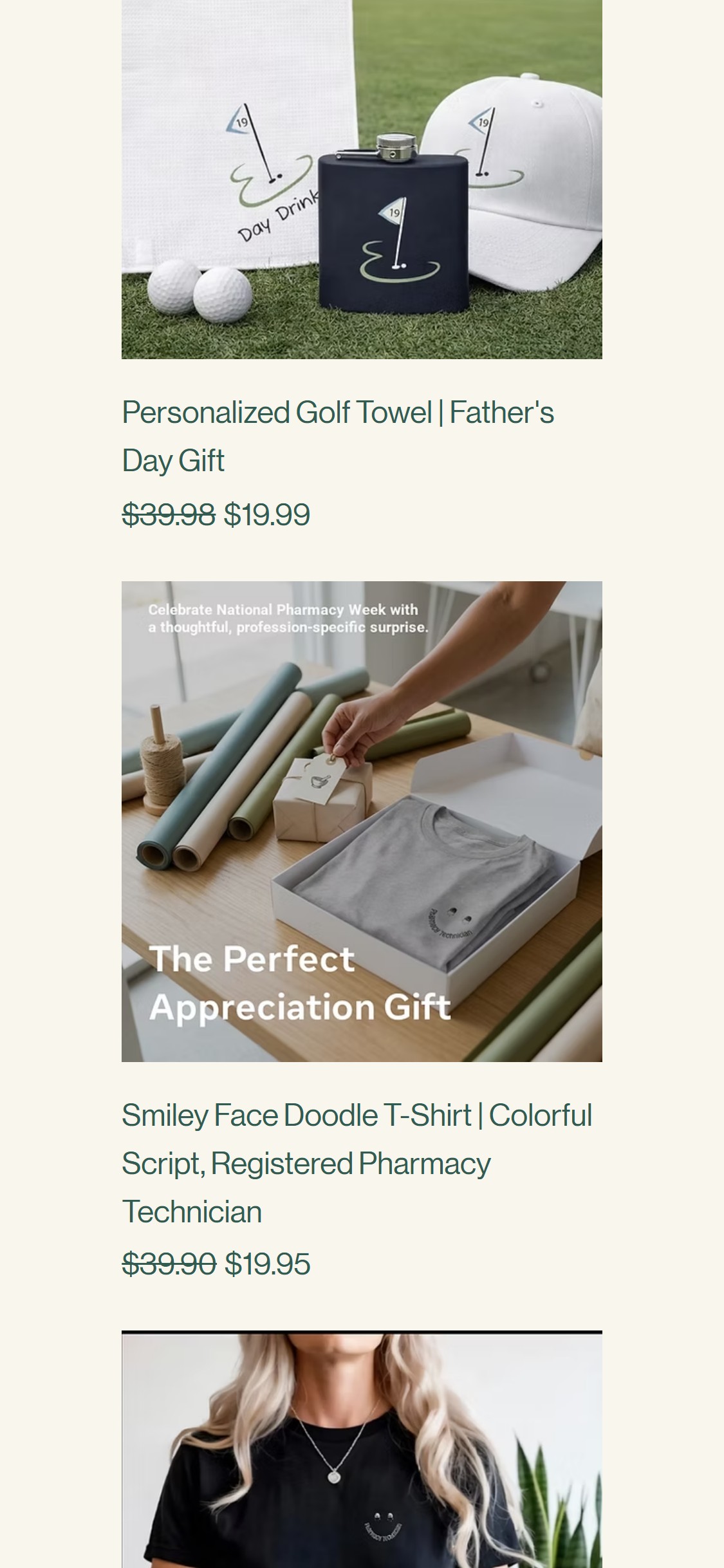
- Every product card in the All Products collection shows only an image, title, and price — no star rating, review count, or social proof badge of any kind.
- Star ratings on collection cards are present on 6/10 top Home & Living stores and on all 3 approved benchmark competitors. For a curated lifestyle brand, social proof at browse stage is critical for building product-level trust.
- Without ratings, all products appear equally unknown to new visitors — eliminating a key signal that guides shoppers toward bestsellers and validated products.
- The brand's own homepage claims '15k+ Repeat Customers' and '98% Satisfaction' — but this brand-level social proof is never connected to individual products where purchasing decisions are made.
- Implement a product review system (Wix has a native Reviews feature) and surface average star rating + review count on each product card in the collection grid.
- Prioritize collecting reviews on the top 10 bestselling products first — even 5–10 reviews per product is enough to show star ratings and significantly improve browse confidence.
- The All Products collection renders as a single-column layout on mobile, showing one product per viewport scroll — a shopper must scroll past 56 full-screen images to browse the complete catalog.
- Two-column grids are the mobile standard for e-commerce collections across all major Home & Living retailers — they double the number of products visible per scroll, reducing abandon rate on catalog browsing.
- Single-column layouts are acceptable for editorial or editorial-commerce hybrids (lookbooks), but Bentleys Bunker's collection is a standard product grid where browse efficiency matters.
- On a 56-product catalog, the difference between single and double column is roughly 14 vs. 28 products per page fold — a browser viewing 4 scrolls sees half the catalog.
- Switch to a 2-column grid layout in the Wix store collection settings. This is a native Wix setting that requires no custom code.
- Consider keeping the hero/banner area single-width but switching the product grid section to 2-column. Ensure product images are square or consistent aspect ratio to avoid uneven cards.
- Multiple product titles use SEO/marketplace keyword-stuffing format: 'Personalized Golf Towel | Father's Day Gift', 'Smiley Face Doodle T-Shirt | Colorful Script, Registered Pharmacy Technician' — these are Etsy/Amazon listing titles, not brand product names.
- On a curated lifestyle brand positioning itself as a 'modern sanctuary' experience, keyword-stuffed titles break the brand voice and signal that products are generic marketplace items rather than carefully curated pieces.
- Long titles (30–60+ characters) truncate on mobile cards, often cutting off the most meaningful part of the product name and making the grid visually noisy.
- Top Home & Living brands use clean, descriptive 2–5 word titles: 'Brushed Cotton Blanket', 'Ceramic Bud Vase Set', 'Linen Quarter-Zip' — titles that work as product names, not search queries.
- Rename products using a clean 'Product Name | Variant' format: 'Golf Day Towel', 'Smiley Script Tee', 'Pet Comfort Bed' — keep SEO keywords in the product description and meta fields, not the display title.
- Set a style guide: product title = 2–4 words, sentence case, no pipes, no keyword strings. The current titles can be split into a short display name + a longer SEO meta title in Wix settings.
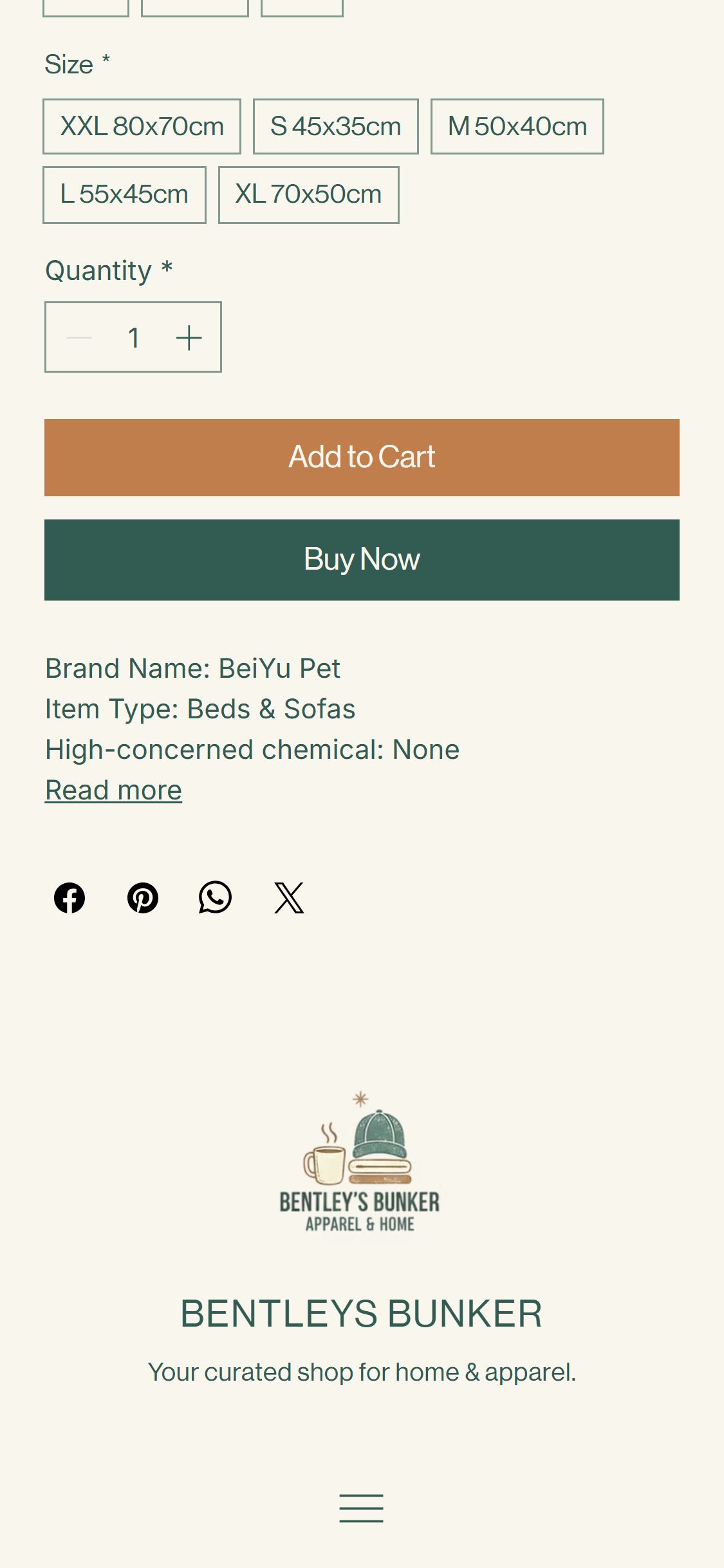
- All size selectors on the Pet Dog Bed PDP use centimeter measurements only: 'XXL 80x70cm', 'S 45x35cm', 'M 50x40cm', 'L 55x45cm', 'XL 70x50cm' — there are no inch equivalents provided.
- The store is geo-targeted to US shoppers who use imperial measurements exclusively. 'S 45x35cm' means nothing to a US shopper trying to fit a bed in a specific corner — they would need to open a calculator.
- This friction is most damaging at the critical variant-selection step just before Add to Cart — any uncertainty about fit at this moment drives abandonment.
- US home & living brands like Article and Lulu & Georgia present dimensions in both formats: '18" × 24" (45 × 60 cm)' — or inches-primary with cm secondary.
- Update all size option labels to show inches first, centimeters second: 'S — 18" × 14" (45×35cm)', 'M — 20" × 16" (50×40cm)'. This is a product variant label change in the Wix store.
- Add a size context line below the selector: 'Tip: Measure your pet from nose to tail and add 4–6 inches for comfort' — this reduces sizing anxiety and reduces returns.
- There is no review widget, star rating, or customer feedback section anywhere on the product pages — verified by scrolling through the full PDP and examining the page DOM.
- The PDP contains Add to Cart, Buy Now, minimal specs, and social share links — but zero social proof at the moment when a purchase decision is being made.
- For a relatively unknown brand, customer reviews are the primary mechanism for overcoming purchase hesitation. Without them, every visitor is making a first-time purchase blind.
- The brand already sells on Etsy (linked from footer), where it presumably has accumulated reviews — those verified purchase reviews could be migrated or cited on the website to bootstrap credibility.
- Enable Wix's native Product Reviews feature (or install a dedicated reviews app) and add the review widget below the ATC section on every PDP.
- Run a post-purchase review request email to existing customers, seeding the review system with real feedback. Import any existing Etsy reviews as testimonial content while the native review system accumulates entries.
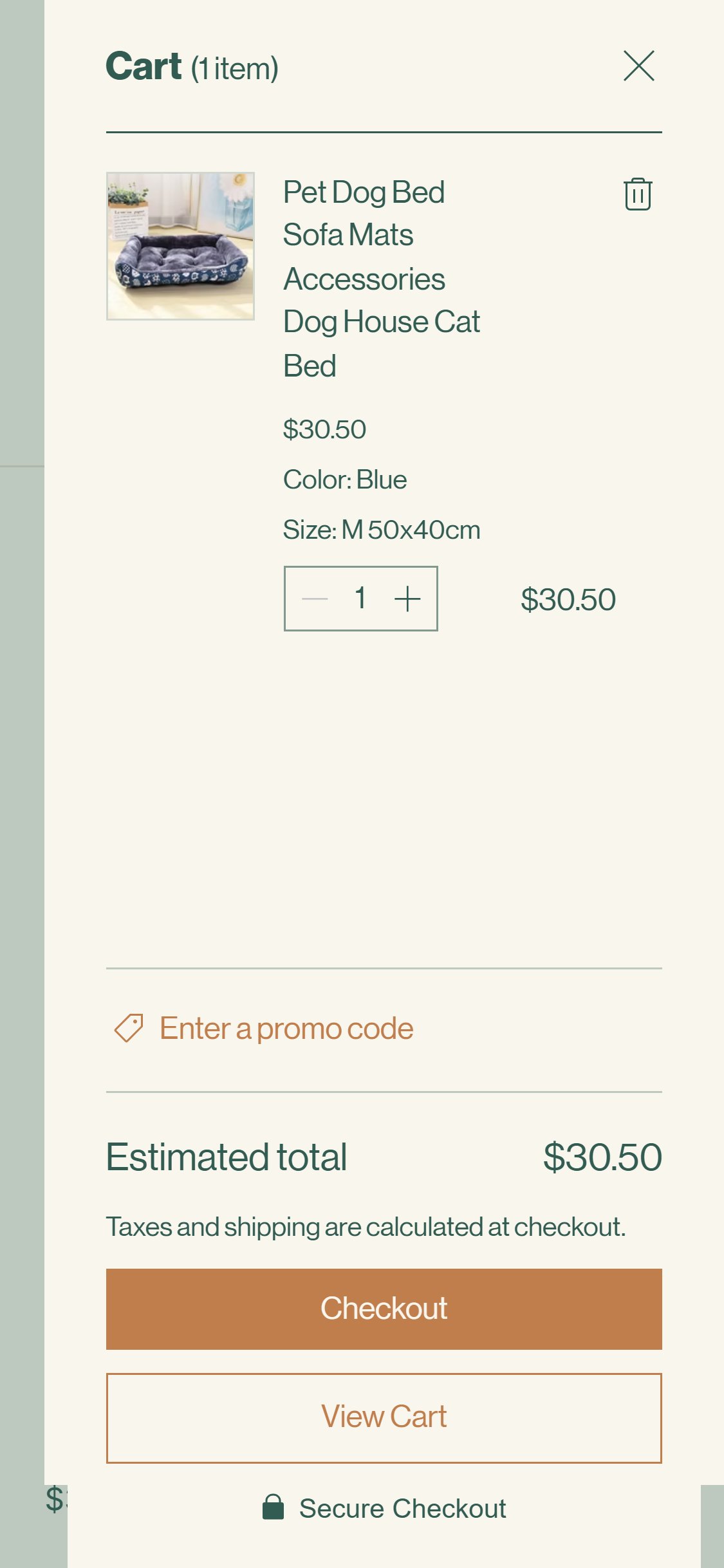
- The Pet Dog Bed PDP displays '$21.75' as the product price. After selecting Color: Blue and Size: M, the cart shows '$30.50' — a 40% increase that was never surfaced during variant selection.
- When a price changes by size, the PDP should update the displayed price dynamically as the user selects each size option — this is standard e-commerce behavior that Wix supports natively.
- A price surprise at cart stage is one of the top 3 drivers of cart abandonment. Shoppers who see a price higher than expected feel deceived, even if the increase is technically justified by size.
- Lulu & Georgia and Article both show price ranges ('from $X') on PDPs with variable pricing, and dynamically update the price field when a variant is selected.
- In Wix product settings, assign individual prices to each size variant. Wix will then automatically update the displayed price on the PDP as shoppers select different sizes.
- If all sizes are already priced individually, verify that the Wix theme is not caching a stale price — this may require a Wix support ticket or theme refresh.
- The product description section shows raw supplier spec data: 'Brand Name: BeiYu Pet', 'Origin: Mainland China', 'CN: Zhejiang', 'Choice: yes', 'semi_Choice: yes' — these are AliExpress product attributes that were copy-pasted directly into the Wix product description.
- 'Choice: yes' and 'semi_Choice: yes' are AliExpress Choice program badge attributes — their presence confirms the product was listed from an AliExpress supplier catalog, not branded or sourced independently.
- Shoppers researching products will recognize this spec format and immediately know they are buying a dropshipped item, undermining Bentleys Bunker's curated brand positioning.
- The brand tagline is 'curated home and apparel finds for the modern sanctuary' — but the product page reveals commodity sourcing that directly contradicts that promise.
- Remove all supplier spec data from product descriptions. Replace with 3–5 benefit-focused sentences written in the brand's voice: 'Designed for pets who demand the same comfort as their owners. This plush bolster bed features non-slip base, machine-washable cover, and cozy raised edges for neck support.'
- Create a standard description template for each product category (pet beds, apparel, home decor) that focuses on benefits, care instructions, and brand story — not supplier attributes.
- The PDP action area contains only: color selector, size selector, quantity input, Add to Cart button, and Buy Now button — there are no trust signals of any kind adjacent to the purchase action.
- No return policy window is stated (e.g., '30-day returns'), no shipping estimate ('Ships in 2–5 days'), no secure checkout badge, and no quality guarantee near the ATC area.
- For a relatively unknown brand with no visible customer reviews, trust badges near the ATC button are the primary anxiety reducer at the final decision moment.
- Lulu & Georgia shows a row of trust icons below their ATC button: free shipping threshold, easy returns, secure checkout, and designer-curated quality badge — each removes a specific objection.
- Add a 3–4 icon trust strip below the Buy Now button: 'Free shipping over $50 | 30-day returns | Secure checkout | Quality curated'.
- Add an estimated delivery range inline below the price: 'Estimated delivery: 5–10 business days' — even approximate estimates significantly reduce purchase anxiety on unfamiliar brands.
- After adding a pet bed to cart, the drawer shows the product line item, a promo code field, the estimated total, and a Checkout button — there are no 'You may also like', 'Complete the look', or 'Frequently bought together' recommendations.
- A customer who just added a pet bed is highly likely to be interested in related home items or pet accessories — the cart is the highest-intent moment to surface complementary products.
- Anthropologie and Lulu & Georgia both show 2–4 contextual cross-sell items in the cart sidebar with 'Add to Cart' buttons — capturing upsell intent without requiring the shopper to go back to browse.
- With a 56-product catalog spanning pet items, home decor, and apparel, there is ample inventory for cross-category recommendations (e.g., pet bed → matching throw blanket or home decor item).
- Enable Wix's related products feature in the cart drawer, configured to show 2–3 items from the same category or complementary categories.
- Manually curate cross-sell pairings for top 10 bestsellers: pet beds → home decor throws; golf apparel → golf accessories; workwear → home office accessories.
- The cart drawer shows 'Estimated total $30.50' and 'Taxes and shipping are calculated at checkout' — there is no free shipping threshold message or progress bar.
- With products ranging from ~$10–$100, a free shipping threshold (e.g., '$50 minimum') would motivate customers adding a $30 item to add a second $20 item to reach the threshold — a classic AOV lift mechanic.
- At current price points, the free shipping threshold is a realistic stretch goal for most single-item orders, making it an effective nudge rather than an unattainable target.
- Article shows a progress bar: 'Add $X more for free shipping' with a green fill bar that updates as items are added — this visual element creates a completion drive that adds measurable revenue per order.
- Set a free shipping threshold (e.g., $50 or $75) and add a progress bar at the top of the cart drawer showing: 'You're $X away from free shipping!'
- Pair the threshold bar with 1–2 suggested lower-priced items ($15–25) below the cart items to make reaching the threshold easy and low-friction.
- The cart drawer bottom shows only the text 'Secure Checkout' with a small lock icon — there are no payment method icons (Visa, Mastercard, PayPal, Apple Pay), return policy assurance, or security badge.
- For a small unknown brand, the checkout step requires overcoming maximum trust barriers — shoppers are committing payment details to a site they may have just discovered.
- Payment method icons (Visa/MC/PayPal/Apple Pay) serve a dual purpose: they confirm accepted payment methods AND implicitly validate that the site is connected to legitimate payment processors.
- Article and Anthropologie display a row of payment icons (Visa, Mastercard, Amex, PayPal, Apple Pay) below the Checkout button, alongside a 'Secure & Encrypted' badge — each icon removes a specific payment anxiety.
- Add a row of accepted payment method icons (Visa, Mastercard, PayPal, Apple Pay) below the Checkout button in the cart drawer.
- Add a brief return assurance line: '30-day returns • Secure & encrypted checkout' as a single line of micro-copy below the payment icons.
Performance & Technology
Core Web Vitals, page-speed signals, and the technology stack powering Bentleys Bunker
Core Web Vitals
Technology Stack
Performance & Technology Assessment
Mobile performance is needs work (—/100); desktop is needs work (—/100) on Wix eCommerce. Page-speed and Core Web Vitals are increasingly load-bearing for SEO and conversion in this category — addressing the weakest vital first is the single highest-leverage technical improvement available.
PageSpeed vs Competitors
| Site | Mobile | Desktop |
|---|---|---|
| This site | — | — |
| Lulu & Georgia | 0 | 0 |
| Article | — | — |
Confidential — Prepared for Bentleys Bunker by Growisto | May 2026
Technology Ecosystem
Technology stack assessment — installed tools vs recommended additions for Wix eCommerce stores
Present (4)
Missing (7)
App Stack Assessment
Bentleys Bunker's app ecosystem is at the bare minimum for a functioning store. The 3 most impactful missing apps are reviews, email marketing, and abandoned cart recovery — together these three could realistically double revenue without any new traffic by converting existing visitors more effectively and recovering otherwise-lost orders. The Wix App Market offers free or low-cost options for all three (Wix Reviews is free, Wix Ascend email starts free, Wix abandoned cart emails are included in paid Wix plans).
Confidential — Prepared for Bentleys Bunker by Growisto | May 2026